
EA Digital Solutions
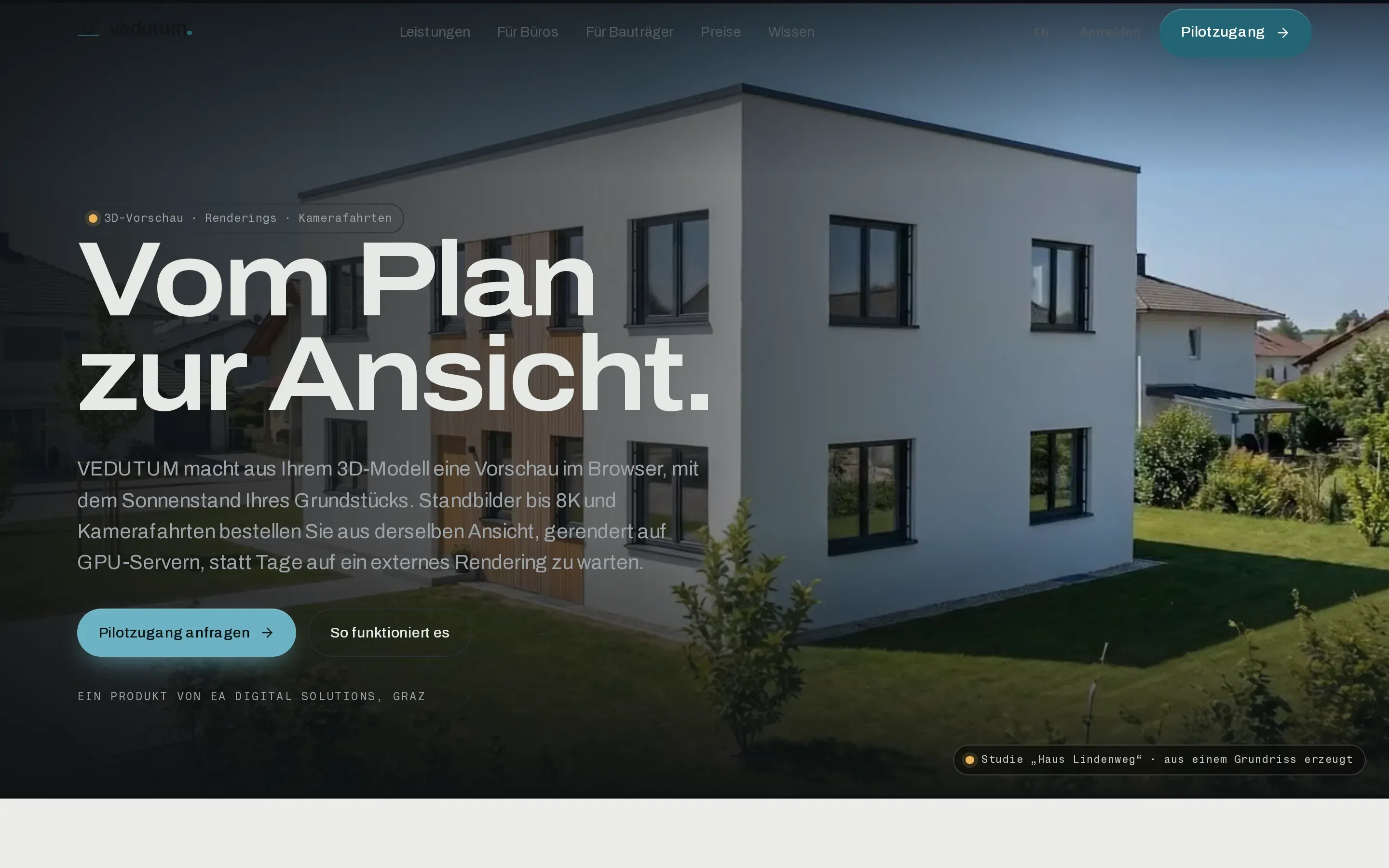
VEDUTUM — from floor plan to 3D model
Individuelle Entwicklung

VEDUTUM — from floor plan to 3D model

Upload a floor plan, walk the model in the browser, order renderings and camera moves from the same view.

VEDUTUM (EA Digital Solutions), Graz, Austria2026Ongoing developmentVisit live site

VEDUTUM is our second in-house product: a platform that turns a drawing into a model you can walk through — and turns that model into renderings and camera moves.

Today the path from a design idea to a picture the client understands takes days: renderings are ordered externally, every variant costs again, and videos are too expensive for most projects. VEDUTUM shortens that path to the time an upload takes.

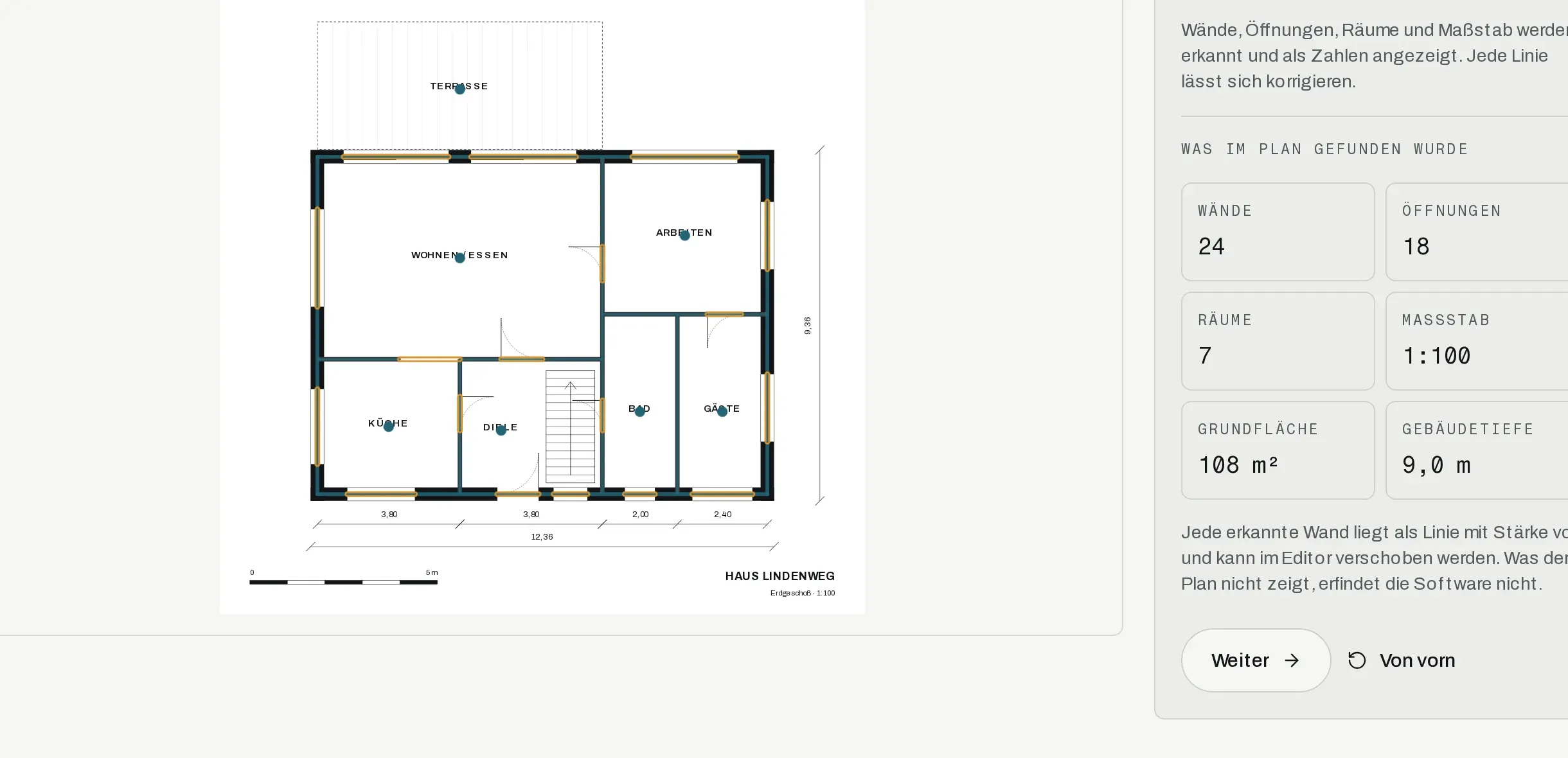
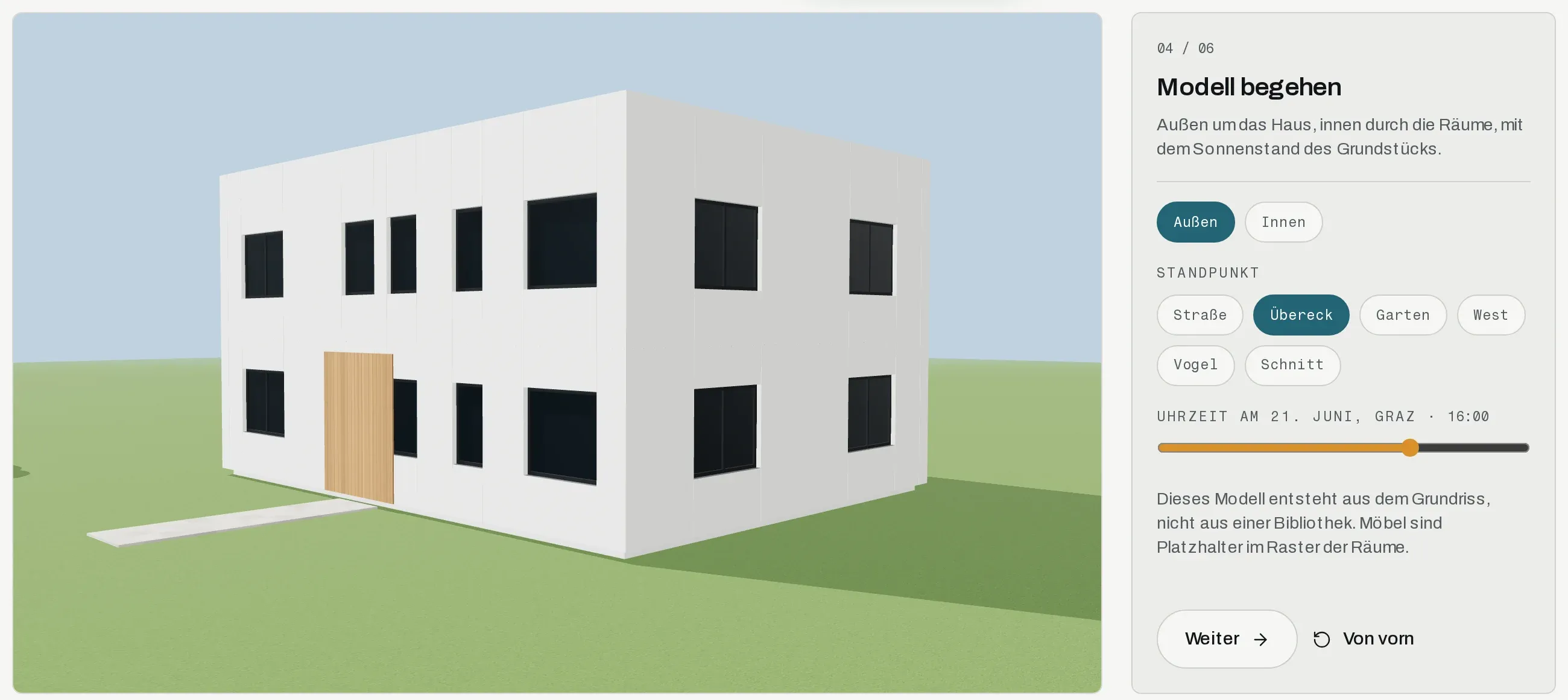
A floor plan as PDF or photo is enough. The software detects walls, openings, rooms and scale, builds a model from them and renders it in the browser in real time — with the real sun position for the site and date. Anyone who already has a building model uploads it as IFC or glTF.

Stills up to 8K and camera moves come out of the same view, spread across several GPUs. Before every order you see the frame count, the resolution and the estimated compute time.

Challenge

Architecture practices and developers work with plans; their clients do not. Between the section a practice reads and the image a client understands lie several days and an external order.

That makes every variant expensive: a different façade, a different roof, a different time of day — each one a new job with a new wait. Camera moves, which show proportion and depth better than any still, stay the exception.

On top of that comes a trust problem: image generators invent façades the design does not have. For a submission or a competition that is useless.

Approach

We put the whole chain into one product: plan recognition, 3D model, browser preview, rendering and video.

Plan recognition reads walls, openings, rooms and scale, and shows every detected line as a value you can correct — what the plan does not contain, the software does not invent. The browser renders the model itself; the sun position comes from the site and the date.

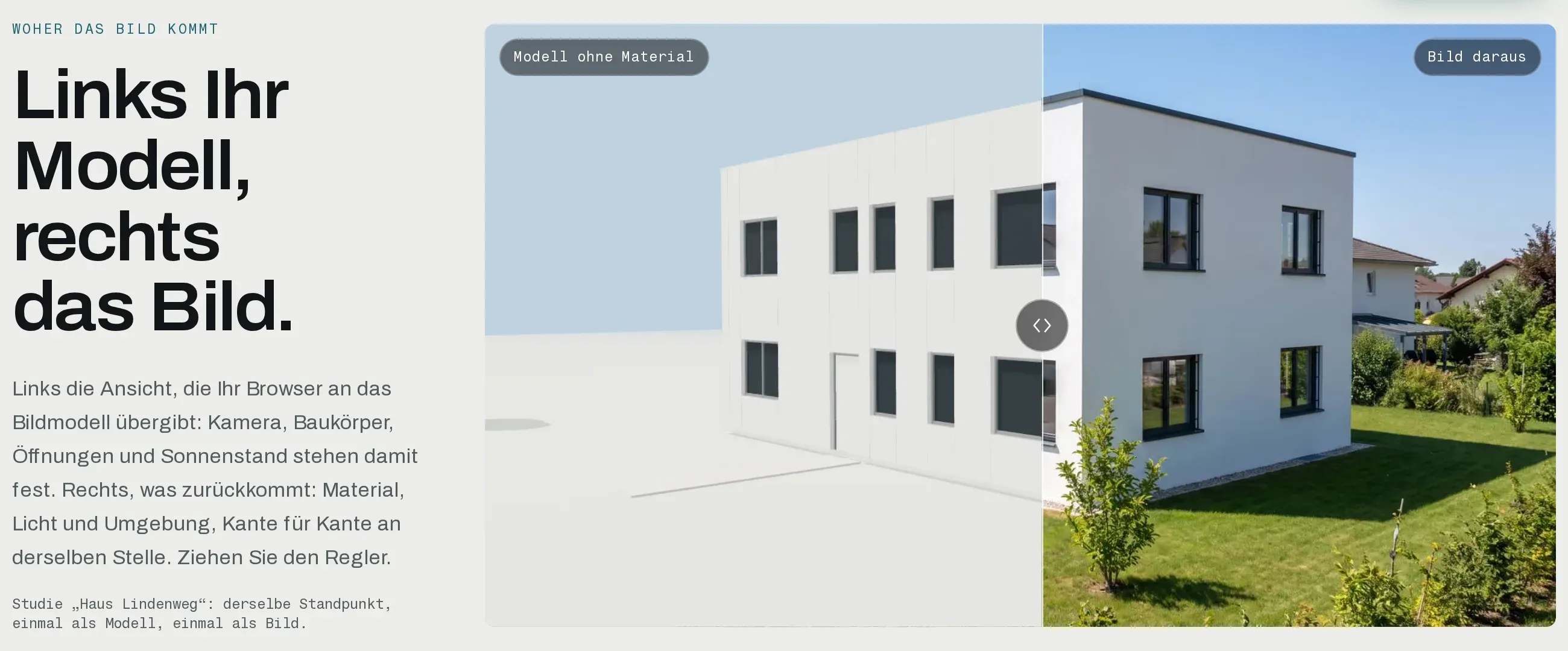
Renderings and camera moves are calculated from exactly that geometry, not from an image model. The frames of a video are spread across several GPUs, so a 30-second move is finished in minutes instead of days.

Share links turn a project into a page the client opens, rotates and comments on in the browser — no software, no account.

Process

01

Read the plan

A PDF or photo of a floor plan is read: walls, openings, rooms and scale appear as values you can correct.

02

Model in the browser

Those values grow into a 3D model the browser renders in real time — with the sun position of the site.

03

Rendering on GPUs

Stills up to 8K are calculated from the same geometry; compute time and resolution are fixed before you order.

04

Video and sharing

Camera moves from templates, rendered in parallel. The share link shows clients exactly what you released.

Results

8K

maximum resolution for stills

≈ 19 min

for a 30-second camera move on 20 GPUs

0

invented components — only what is in the model gets rendered

In motion

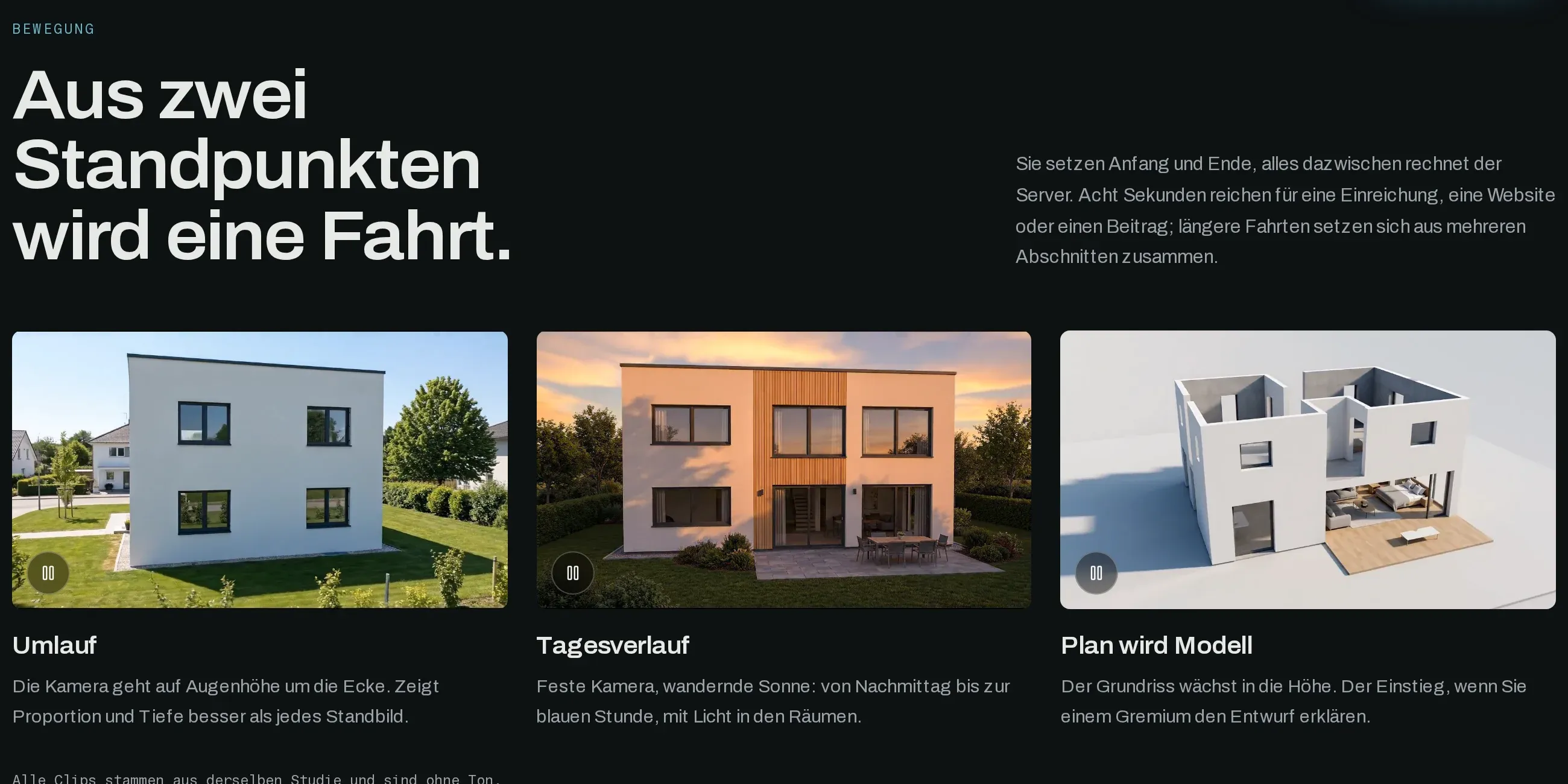
A short loop from our own captures — no sound, plays automatically.

Gallery

Plan recognition: 24 walls, 18 openings, 7 rooms and a 1:100 scale
The model in the browser — viewpoint and sun position freely selectable
The model on the left, the image calculated from it on the right
Camera moves from templates: orbit, time of day, “plan becomes model”

Tech Stack

Next.jsReact Three Fiber / WebGLIFC & glTFGPU-RenderingPostgreSQLVercel